
A Religious Board Game, Seriously?
Hello!
Welcome to the first post of Dear Euthyphro Studio, a place where we leave rambling thoughts that are niche and weird and ultimately left in the proverbial kitchen drawer like a piece of cheese mistaken as a fork. This blog is to really go in-depth with regards to topics not usually discussed, and to provide a creative outlet to some musings during the game design process.
Today, we have a BIG topic to discuss. Religious games.
And before we get started on the juicy goodness of it all, I think it’s important to categorize and define some genres of ‘religious’ games.
The 'Super Human' Simulator
I would say the most common kind of religious game in the year of our lord, 2026, would be the synonymous treatment between deities and the immensely powerful. For example, I was playing Hades 2 in between bowls of oatmeal, and while that game is fantastic, I don’t see it as a true ‘religious’ game.
The many gods and immortals you interact with, Zeus, Hermes, Poseidon, are not distinctively different from ‘super’ mortals. They share the same emotional follies of humans. Hubris, jealousy, laziness, vindictiveness, opportunism, egotism, are all present in the immortals of Hades 2 that are distinctively like the way we discuss flawed heroes of today.
(This isn’t to say a monotheistic or an ethereal sense of God(s) couldn’t also be characterized in the same way, but Hades 2 explicitly highlights these traits as the point throughout the game.)
From a ludic perspective, Melinoë is more equivalent to an up and coming ‘hero’ than a god. She gains fans, she finds support, she earns her place in the pantheon by acts of dominance over other immortals, not some profoundly esoteric or spiritual means. In a real way, Melinoë is climbing the corporate ladder as she solves unique problems other gods can’t seem to solve.
Gods, yes, but religious? I’m not 100% sure…
A polytheistic pantheon interpretation maps just as well onto religious experiences as a monotheistic one, but from a ‘religious game’ perspective, it can be easily argued that Zeus is a superpowered CEO trying to stop an aggressive takeover of the previous CEO with the help of an up and coming super talented younger hire. The closest form of prayer Melinoë does is briefly glance at a bust of a respective god to activate their power on the third floor, which is more akin to speed dialing a favour from one of their VPs. For whatever reason, when a polytheistic game is made, it generally can be palette swapped with another secular power structure.
There is nothing wrong with this, and this is obviously not new insight. I had a fantastic time with Hades 2. But it is not a religious game in the purest sense. It is a ‘Gods as humans, but stronger’ kind of game. Whatever ‘religion’ exists is purely an acknowledgement of mortals in contrast to divine entities. Other games, like God of War, take this a step further where the gods and their struggles are essentially a glorified UFC season mixed with the melodrama of an ancient soap. They are, in every meaningful sense, large, long lived people, with magic and personal grievances.
This allows for extremely human developments and plot lines, and a common recurring theme is that ‘Gods are not better than mortals, we share the same follies’ (see Arachne x Athena for the most obvious example). Which makes for great narratives, fantastic gameplay, but are not ‘religious’ in any meaningful sense.
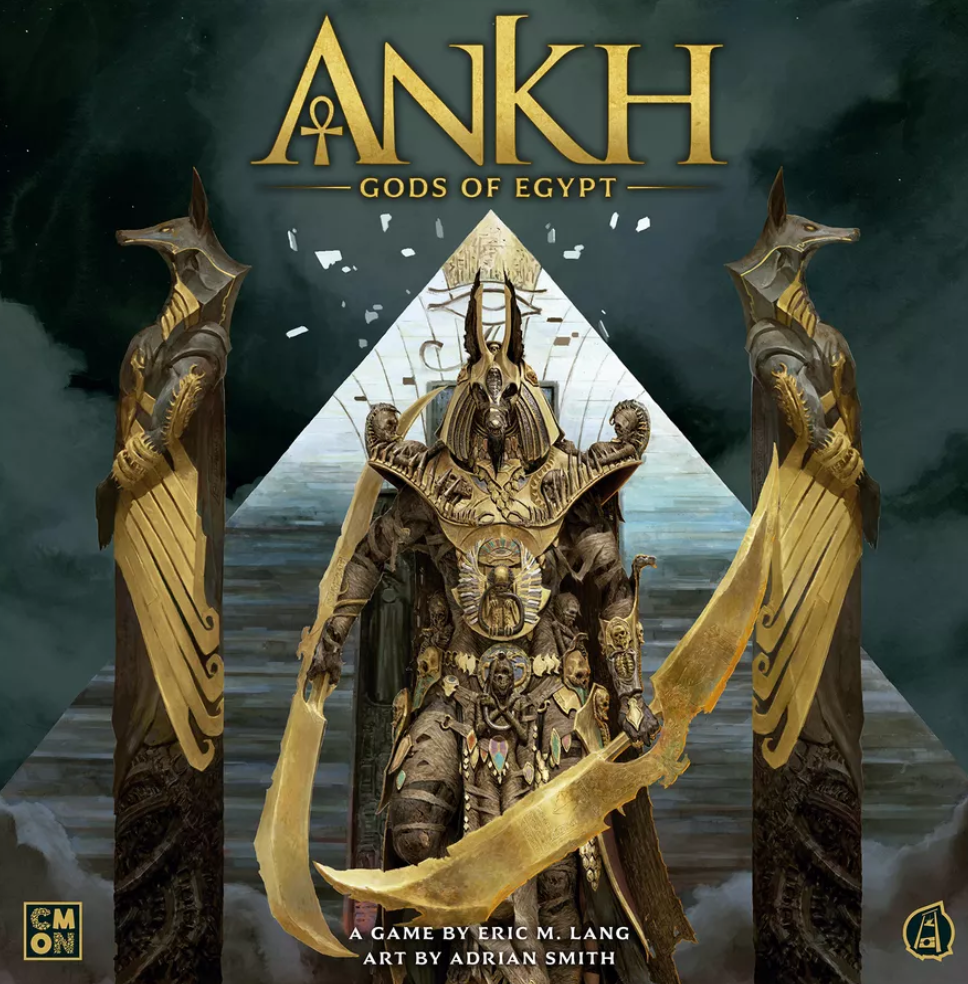
This same ‘super powered humans as gods’ approach is shared in board games like Ankh: Gods of Egypt & Kemet: Blood and Sand. Which both utilize Gods as leaders for war (in this case Egyptian gods). The aspects of religion are supremely superficial and ultimately it’s hard to see them as anything other than extremely powerful wizards.
God as ‘King’
Another variant of the religious game is the ‘God’ game. These games are unique in that they want you to simulate the existence of a higher power.
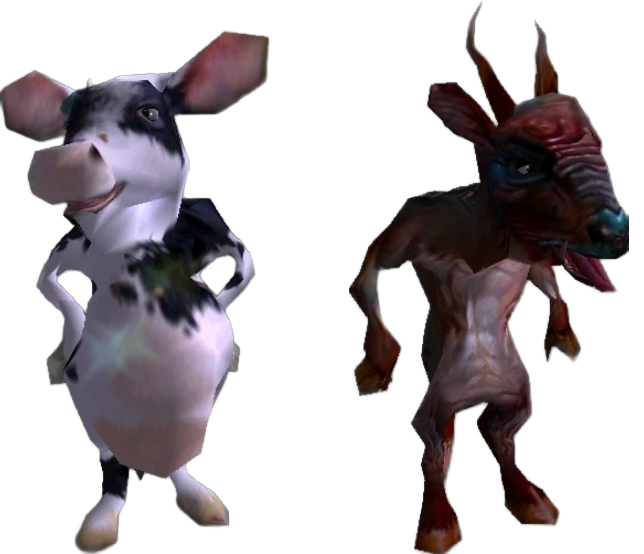
Black & White, Populous, Worldbox, even the Sim franchise, are all popular games that hand you the reins over a domain and expect you to do something. And what is that something in the most literal sense? It’s management. You fulfill the sacred role as the one entity to decide rainfall patterns, to produce grain, to smite non-believers, to pet a very large evil cow.
This God-as-King genre is modeled around a divine as the sovereign authority. It’s fulfilling a political role as a divine entity. You sit above the rest of the world, and you issue decrees on those little tiny followers who then worship you for sick points and upgrades. But it’s really just managing employees to create the product to sustain your control.
I think these games are fun, they’re great. I’m very fond of the Black and White franchise, and I think the novelties present are simply fantastic. But I think it’s really interesting how the function of God is fundamentally about control. The more you have the ability to manipulate, the more powerful you are in a measurable, ludic, way.
‘We have not been created for this, but we have been created for ploughing.’
I think this is a fairly shallow way to actually interpret ‘divinity’ and ‘religion’. It narrows it into a much more black and white (heh) understanding of what ‘God’ is. God is power. God is objective driven. God is literally above in the sky. But I think this leaves no room for ‘religion’. If religion is just an arbitrary set of actions imposed by a player to better manage people then there is no real space for nuance within the game. Your acts are simply pragmatic forms of control to score points and reach the goal set by the game.
In other words, is there anything that can be described as ‘religion’ besides the best way to optimize the game towards the objective?
This really ignores the massive percentage of people who have a very different relationship with religion. Most religious people would not say ‘God is manipulating us for some specific objective’ (there are notable exceptions). Instead, the relationship between the divine and ourselves is often seen as one of love, or sustenance, or even some sense of deliberate withdrawal. The Kabbalistic concept of tzimtzum is God specifically retreating to make room for the world to expand into the ‘vacant space’. In a God-as-king genre, there is never a moment of withdrawal, just further expansion of power.
I think Board games, in general, will put you into an almost divine role as well. Games where you control vast spaces, or over a vast faction, is very similar to acting in a god-as-king role. Think about TI4, for all its sci-fi flair, it’s basically you playing as a God and your faction is the congregation. Or more abstract, recently I was playing Earth, dictating the pathway of an ecosystem, like an all powerful gardener, which might be the most lore accurate representation of God to some people.
Other board games, like Gheos, will explicitly have you play to optimize land and settlements, but in a way that is ludically more similar to Castles of Burgundy than it is to a religious game. The puzzle, at it’s core, was one of numbers and control.
I don't think the God-as-King genre is wrong about religion, exactly. But I do find it 90% incomplete. It captures the control, but not the relationship the individual has with their own religion. Ultimately, it's a genre that leaves nothing to interpretation.
The Institution
A third perspective of games is Religion as an Institution. These games don’t necessarily interact with a specific deity or presence, but instead try to treat religion as a social structure. A bureaucracy of stained glass.
Historically, games use this as a resource and mechanism for strategic decisions. The Civilization series treats religion as a form of victory, you form one, you spread it, and eventually you win. Crusader Kings uses the church as a bludgeon to launch a holy war, or as a needle and thread to legitimize dynasties.
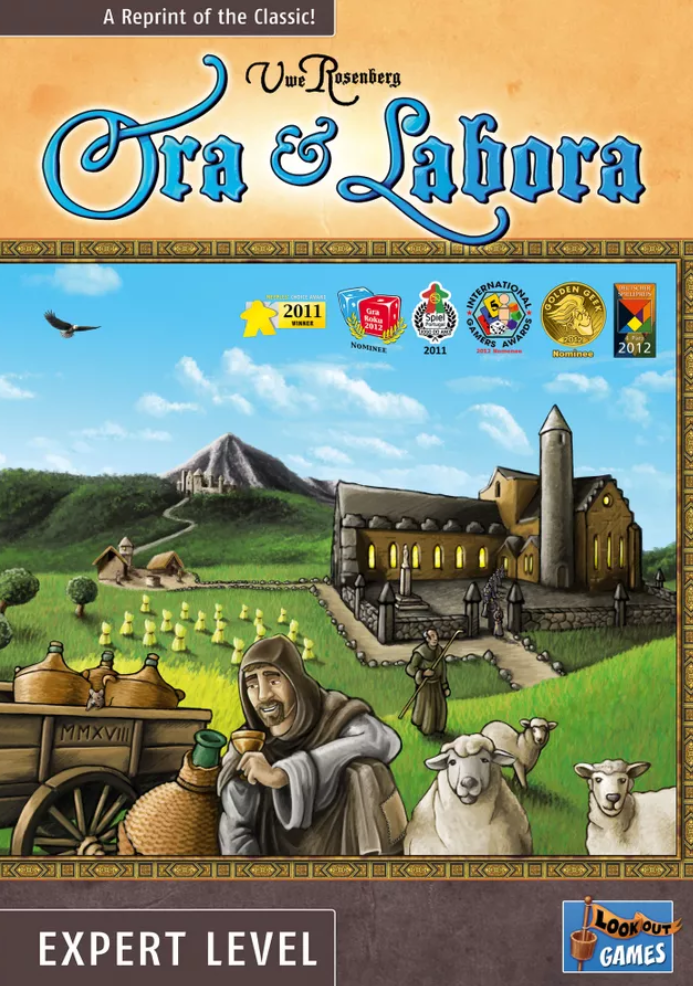
Board games also use religion for similar purposes. Pax Renaissance 2nd edition pits Catholics, Muslims, and Reformists almost as win condition tools of the economic system (pretty dang spicy imo). Ora et Labora has you building a monastery, but like many board games, the puzzle is one of logistics and the physical space of the institution itself and not necessarily reflective of the faith and belief structure.
But these games are capturing something. They capture the budgeting, the influence, the internal politics that are intrinsic to religious institutions. Faith and its institution is an explicit tool that extrudes into legal codes, into the structure of the land, and exists as a reflection of the heart.
How are late 2000s/Early 2010 Euros so magically nostalgic?
It’s also worth noting that JRPGs have been obsessed with religion as an institution since before I was born. Where in Western designs, we tend to see the religious institution as a ‘tool’, the trope in JRPGs is one of destruction. If you start a game and there’s a Church of Something, a Temple of Y'know, you’re practically guaranteed to have revealed a secret false god and an evil pope, by hour 40. We all know, you’ll end up going to heaven, killing a god with a sword that doubles as an anime girl.
Xenogears, Tales of Symphonia, Final Fantasy Tactics, these are obvious choices, but the list is practically endless. The absence of an evil church is more surprising than its presence. But the thing that interests me is that these games are not usually atheistic. They almost always affirm some form of spiritual truth that’s hidden behind the man made institution. There is a real form of the divine that is either literally, or metaphorically, wrapped and suppressed by the man made church. It’s like the true form of God is held hostage by the institution.
I find a powerful, weird tension in this space of design. The religion as an institution model, whether being built or destroyed, will inevitably evaporate divine aspects in favour of human designs. For example, in Pax Renaissance, the game doesn’t truly care if you, as a player, believe in Islam or Catholicism or their teachings. It only views these religions as a tool for victory.
A game like Tales of Symphonia, a classic JRPG filled with the usual tropes, engages with the Church of Martel as purely a narrative mechanism of opposition to the player. The theology itself is always exceptionally over the top evil, and it’s never meant to actually challenge the individual’s own existence. It is narrative pillar built to be dismantled.
This all brings a series of questions to the forefront, how can an economic simulator challenge the faith of players? How can a religious game create a human puzzle?
More completely, what does it mean/look like to have a game where the institution and the transcendent claim are in tension?
A Potential Counter Argument
A valid counterargument is that these games distinctively capture the religious understanding of their respective times, and therefore are fully religious in the most meaningful sense.
Greek religion was ultimately a power hierarchy that mimicked human structures and the emotional volatility that reverberated across the populace. The god-as-king genre mirrors centuries of sovereignty theology where the divine right to rule was the central religious claim. The post-reformation world fully merged the bureaucratic and political machinery with faith. Making a monastery and handling the day to day budgeting operations was religious in the most pragmatic sense.
But the problem I still have is that even if religion is its social structures in practice, these structures are still motivated by something. It’s not like people built cathedrals and monasteries because they enjoyed project management. These hierarchies, these institutions, were ultimately downstream effects of interpretations and convictions. I think games have gotten extremely good at simulating the effects of religion, without ever questioning what produced these effects to begin with. It’s always about the output of what religion is, and not the input into the belief structure.
So I suppose the question is, what does a game look like when it’s all about the input?
Sunlit’s Eulogy Design Thoughts
So after all that categorizing and ruminating I’m sure you can see why it’s hard to make a religious game that takes the internal experience of religion and gamifies it. It’s so painfully easy to apply a Ramadan theme to a calendar themed tile collection game, focused on making food for iftar, or to create a worker placement game about proselytizing a town to attend a fading church. But the problem I find is that these do not actually merge the religious with the ludic if they ultimately are a theme applied over mechanics. Movement of people and resources does not make a game ‘religious’ in the ludic sense.
Put simply, the problem I kept encountering was this: is a game religious simply because it references religion?
If there was a new span-type game that was collecting followers to add to your church, does that make it actually religious??
Or….. if we do a reskin of candy land, and make it a pilgrimage, does that make it into a ‘religious’ game?
Nah dude.
So I spent a lot of time actually framing Sunlit’s Eulogy to avoid the game related problems of divinity, the human institution of religion, and the ludonarrative experience. These are not the only solutions, but they are the ones I settled on. Ultimately, they’re thematics and goals that should meld the actual happenings on the board with the feelings of being in the founding days of a religion.
Divine Command Theory works best for gameplay diversity.
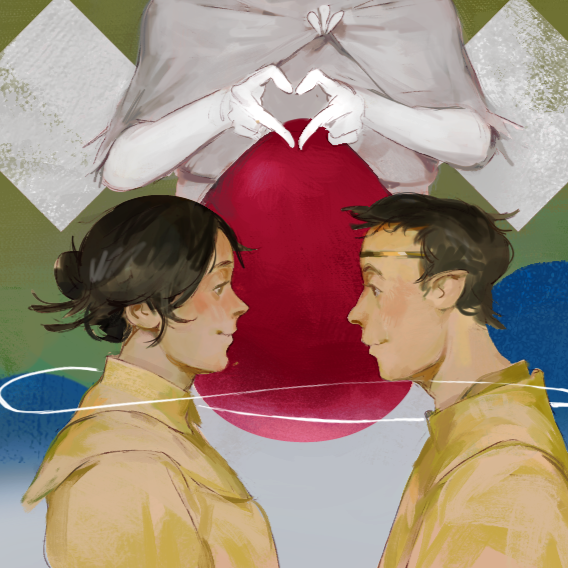
In Sunlit's Eulogy, the Disciples represent different aspects of religion. One Disciple works with populations, marriage, children, and divine lineage. She can specifically implement doctrines of monogamy or polygamy, and both are morally acceptable without pushback from followers. Another is centered around wealth and prosperity, whether poverty is a virtue or is wealth a divine gift to be treasured. Another deals with physical structures of religions, the immortal tombs made or the houses for the needy, which should be prioritized in the religion?
I’m not sure if any other board game has religious based matchmaking as a mechanic?
If the game's moral framework is anchored to divine command theory, then the content of the commands can change between playthroughs without breaking the narrative being created. Monogamy isn't inherently 'right' and polygamy isn't inherently 'wrong' within the game's logic. The transcendent God(s) that are present in the mind of the players will never say ‘your action is wrong’ specifically because the action itself is right if the player decides it to be the correct interpretation of the will of the transcendent(s). In other words, what matters is what the player decides is doctrine, and how the institution of all the players must adapt to the shift.
There is no moral position that can’t be justified by just saying ‘God says this is good’ within the game of Sunlit’s Eulogy, and this is necessary for the ludic and narrative to exist without conflict.
Divine Command Theory has its own philosophical problems, Euthyphro is literally in our studio name, but to use it mechanically allows for gameplay to shift dramatically without the narrative punishing you for it.
This is generally the default position in religious games. But I find it especially important in a game where the players will ultimately decide what the faith is. From this perspective, the players must have the authority to decide that their interpretation of the faith is the right interpretation.
Without Divine Command Theory as the underlying framework, the game would be more susceptible to embed its own moral judgments (i.e. X doctrine is morally correct, Y is immoral) and the moment it does that, the players stop being Disciples interpreting and implementing what they see as both pragmatic and divine will, but instead they start being executors of the designer's implemented theology (which will make for a far more boring game).
The game has no interest in proselytization to the player. At the end of the 120-150 minutes, the religion and its belief structures have to belong to the players, not to me.
The Primitive Religion gives room for interpretation.
Branching off DCT, each Disciple is essentially working from a primitive understanding of what the religion is. There isn’t a catechism or generally accepted rules. There are fragments of divine guidance when the game begins, but players are intentionally weak and their doctrines are non-synergistic to encourage the players to engage with potentially uncomfortable doctrines for the benefit of the game state.
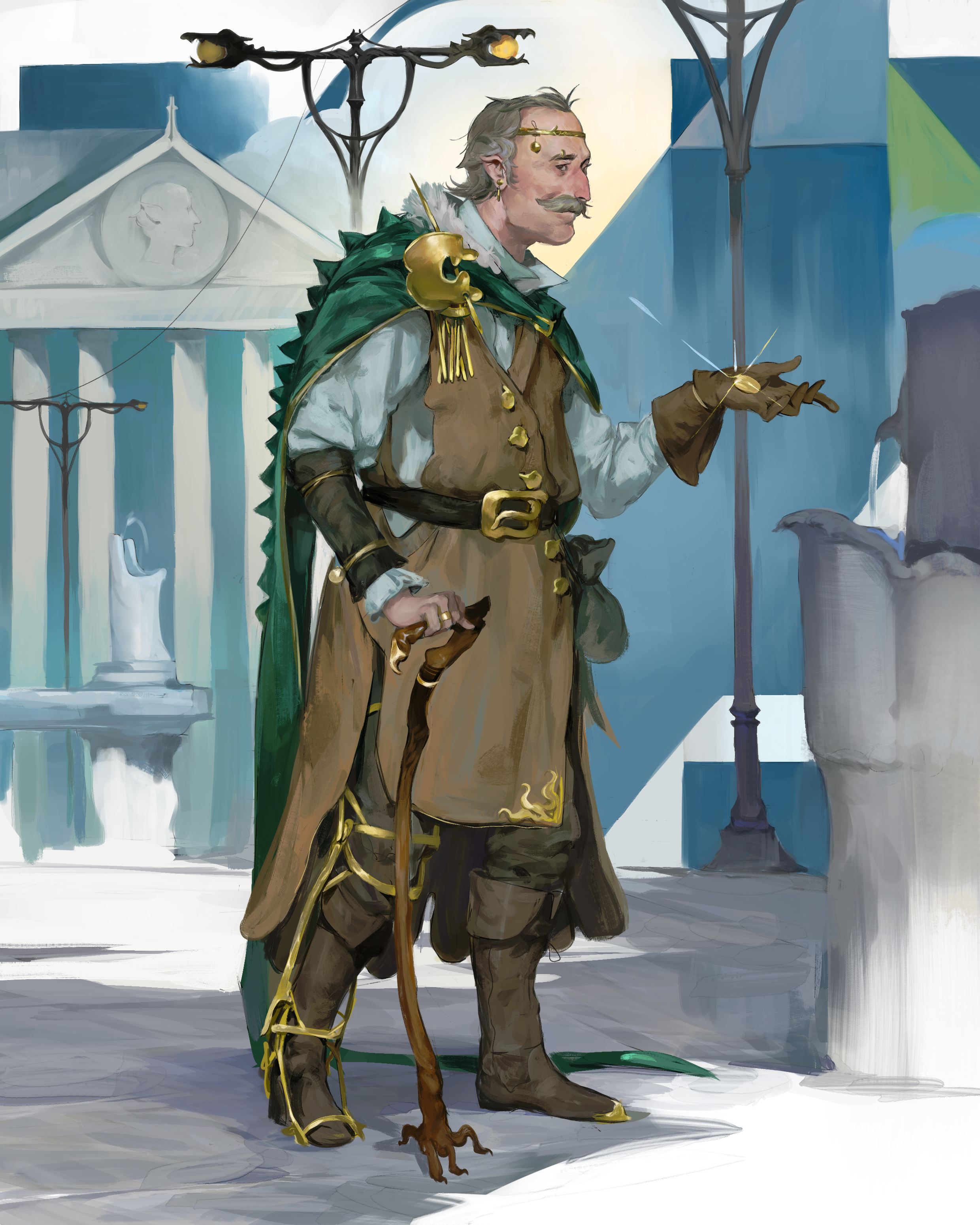
Is prosperity a boon, or is it a test? The player needs to interpret and decide.
Beyond that, It was important to me that the actual terminology of play was left ambiguous. What does it mean to lose a follower in the ludic sense is easy, but from a narrative sense it might mean death, or apostasy, or illness, or travel, or any other such event. To guide this ambiguity, artwork is the primary method of communicating narrative meaning. A card with a knife on it will have a very different player interpretation rather than a card with a backpack on it, even if both cards have the same effect.
The Disciples themselves don’t have a set of rigid beliefs, but instead the faith is constantly adjusting to the ludic needs of the player. If the player needs to be more aggressive, or to be more economical, or to create more followers, I (as the designer) need to provide narrative tools that don’t contradict the idea of a faith. In order to do this, the faith needs to be in its embryonic form, resembling many other possible faiths but what might look like a hand might end up being a tail.
For example, if a player is falling behind economically, it might be necessary for them to implement doctrine that would tax followers in their controlled regions. The existence of this tax is up to interpretation. Is it a mandatory tithe? Is it a form of protection money? Is it liberation from material possessions and return to a deeper spiritual form of existence? This is something that can be hinted at through card names and artwork, but more importantly, it is decided by how the player presents the tax.
If the Green player taxes the Red player, they might say ‘this is so that I don’t attack you’, or that ‘your people are safe here’, or that ‘less money is good!’. It’s a way to create a ludic and narrative harmony between players, but is unique for each group.
We must give space for the players to create their own perception of what the faith is.
This is why I find the primitive religion so satisfying: you’re actively involved with the designing of what will be effective in the moment, but also a thousand years from now.
The central conflict is the text.
A unifying event in many major religions is that the prophet doesn't write the scripture. This creates a narrative core, but also is ludically the main conflict.
The Torah was written over centuries by people who were not Moses. The Gospels were written decades after Jesus by people that possibly met him. The Quran was the verbal word of Muhammad, but it was collected and cemented well after his death. The Pali Canon was shared verbally for centuries before it was written.
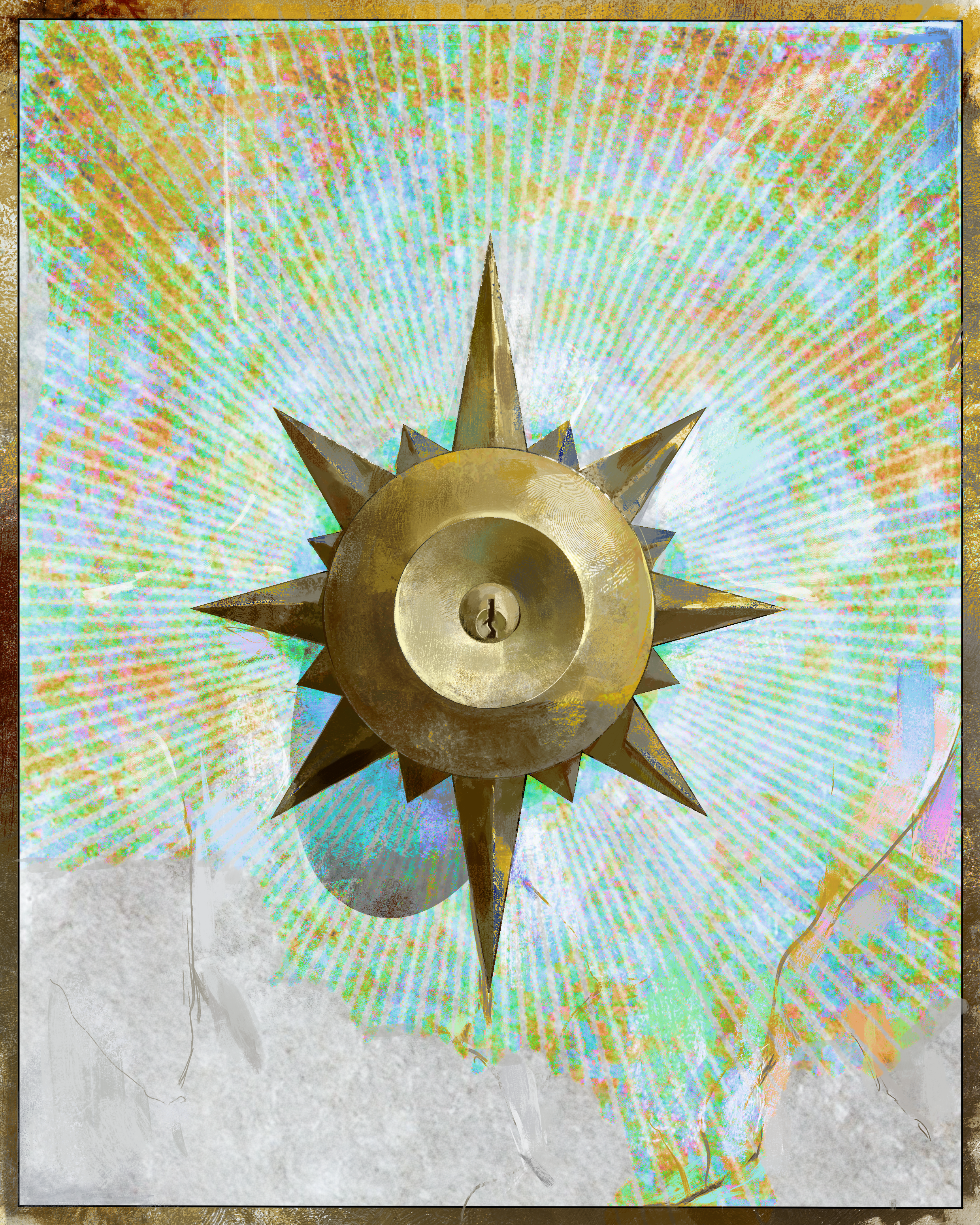
Cards double (actually quintuple) as the pages of sacred text.
Religious precedent, for whatever reason, creates a gap between the text and the prophet. And that pen, the ink on the paper, will often become the central piece of the religion. The prophet could have done or said anything, but it’s up to the strongest believers to codify those beliefs.
Sunlit’s Eulogy uses this as the central conflict. The Eulogy itself is the central text. And the disciples trying to put in certain beliefs, certain truths, is the central conflict that spins the aggression between players. And because the Eulogy is the document formed by the Disciples, it will be in a different form each and every game.
This means that the success of the religion is dependent on the texts themselves, and this is the central win condition of the game.
While I think this is a fantastic core conflict for the game to have, a lot of struggle was found with how these words were put in the eulogy, and ultimately how the scoring is done. At the end of the day, Sunlit’s Eulogy is still a strategy game, and skill expression needs to exist. From this perspective, I do concede that some abstraction was necessary to change words in the Eulogy to points, but it’s a concession that has the profound benefit of actually making a competitive game.
Now, of course, I should be upfront that the religious model of Sunlit’s Eulogy draws largely from Abrahamic traditions. The routine of revelation, competing interpretations, sacred texts, are obviously easy to transpose to many Abrahamic-like faiths. This isn’t to say this is the only way to create a religious game, but I find it the most ludically rich for a conflict driven game and it’s a system I am more confident that I can gamify successfully.
So, that’s some thoughts. It’s exceptionally tricky to avoid flattening the divine into a set of stats. It’s far too easy to reduce the complexity of a religion into resources and exchanges. It was important to me that I don’t create a theology, as much as it was to create the feeling of being in religious conflict from multiple fronts. I know this blog is more about the theme and approach, but definitely expect to see gameplay focused updates soon.
Thanks for reading!
~BigPasti